Merging
Five recipes, one onion line. Overlapping ingredients combine into a single quantity instead of five scattered entries.
You bring the recipes and your taste. Ceres does the planning, the list, and the counting. Here is the whole loop, start to finish.
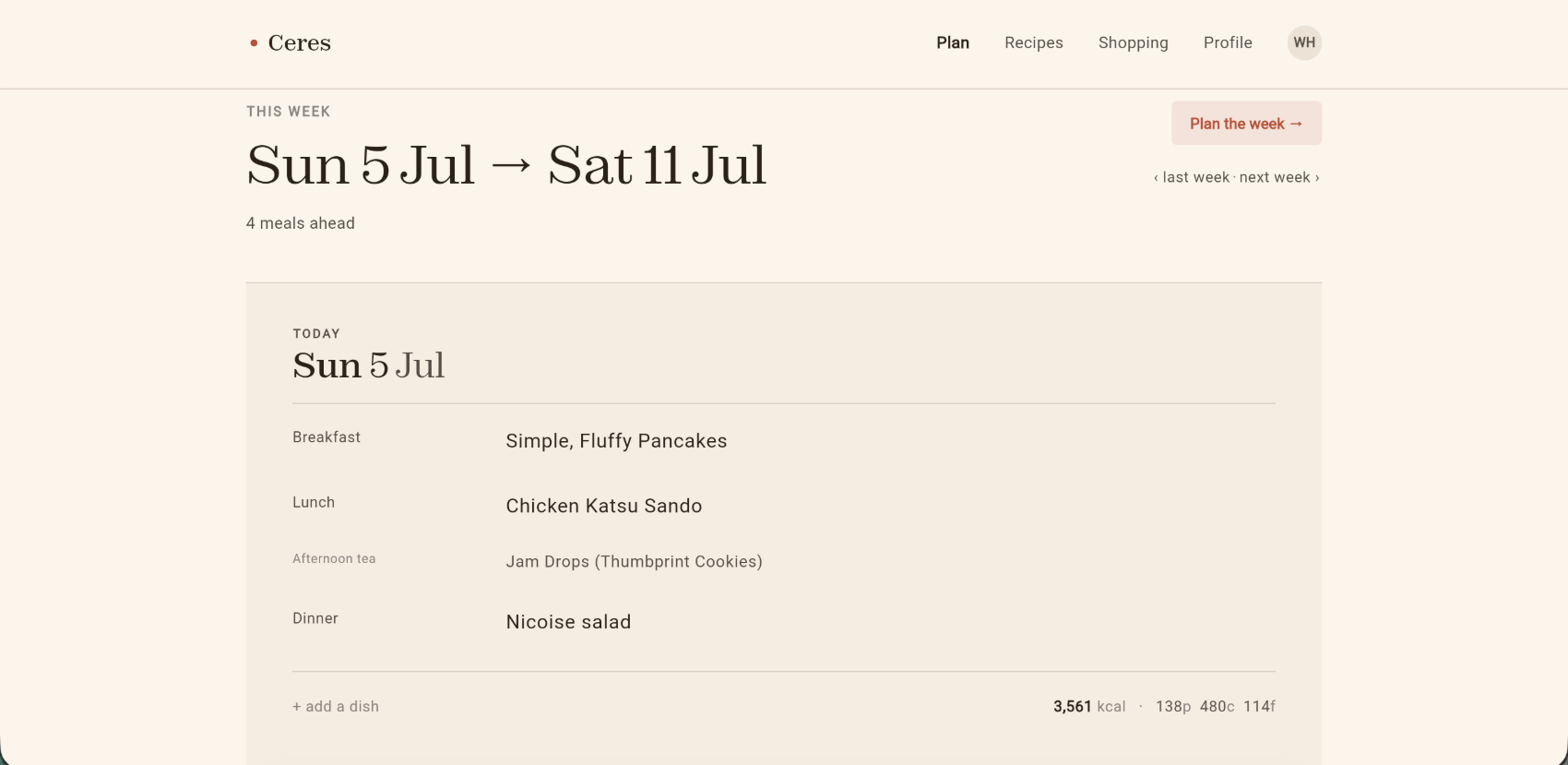
Tell Ceres you want a plan and it composes the week around what you have and the food you like, breakfast through supper. Nothing to approve card by card. It arrives as a plan you can live with, and you adjust the few things you want to change.
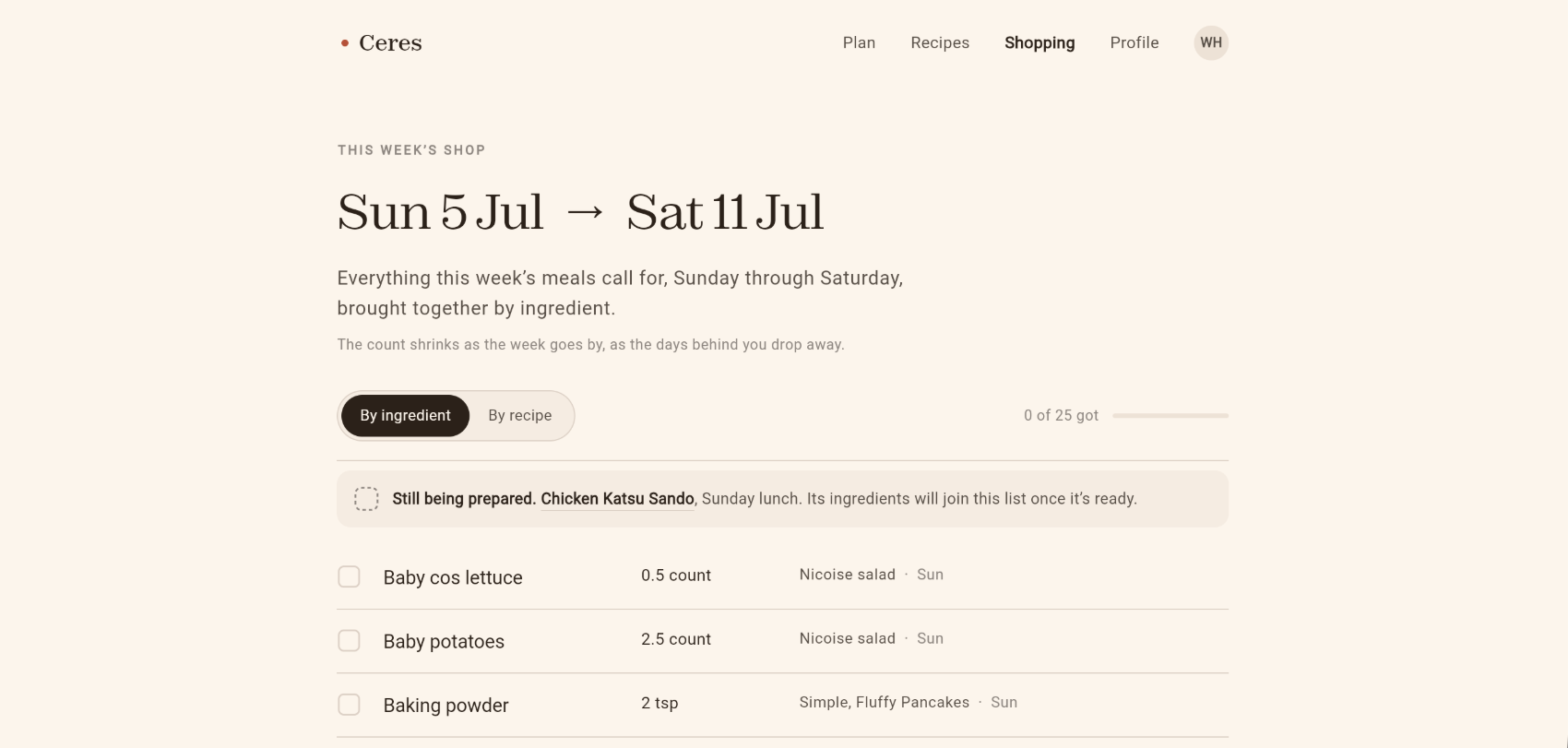
Every recipe in the week folds into a single shopping list. Repeated ingredients merge and quantities add up. You check things off as you go, and what is left is exactly what you still need.
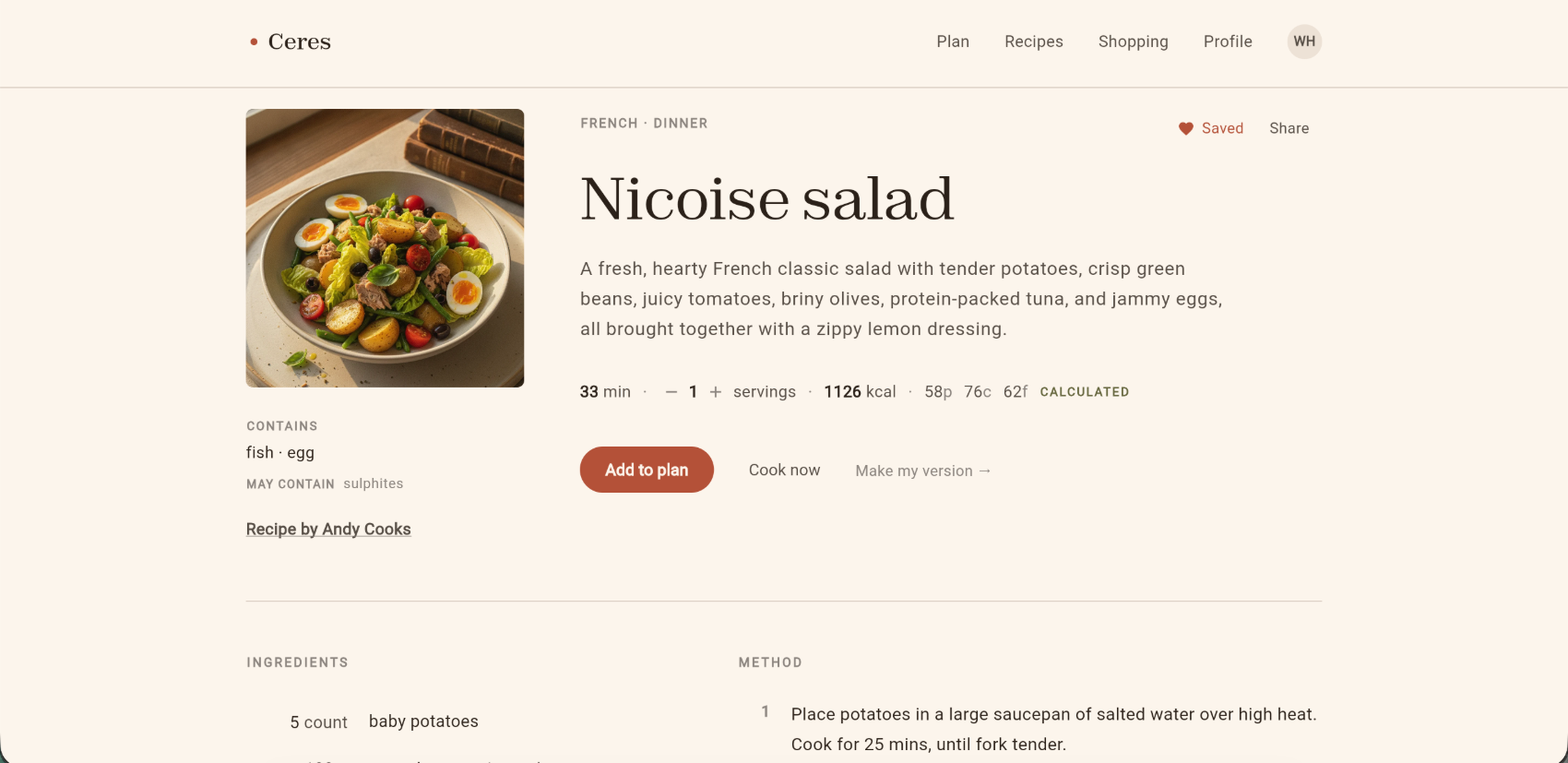
Open the recipe and cook. Change the servings for tonight and the ingredients and nutrition follow at once. The day's calories and protein add themselves up as a quiet consequence of what you chose, with nothing for you to log.
Small, repetitive kitchen chores that quietly eat the evening. Ceres takes them so the cooking stays yours.
Five recipes, one onion line. Overlapping ingredients combine into a single quantity instead of five scattered entries.
Two tonight, five on Sunday. Move the servings and every amount recalculates, cleanly, without fractions to work out.
Calories, protein, carbs, and fat totalled per meal and per day, so you can glance at the numbers instead of tracking them.
Tick items off as you shop, and the list holds on to exactly what is still left to buy.
Ceres keeps what you cook and what you like, so next week's plan starts from your kitchen, not a blank page.
A balanced week across the days, not the same three dinners on repeat, built the moment you ask for it.
That is the whole of it. Plan, shop, cook.